
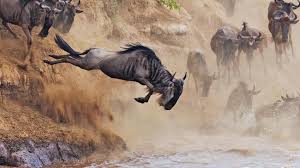
The Wildebeest Migration is one of the most breathtaking natural phenomena on Earth. Often called the Seventh Wonder of the World, this year-round cycle attracts travelers from all corners of the globe to Kenya and Tanzania. Millions of wildebeest, accompanied by zebras and antelopes, move through the Serengeti-Mara ecosystem in search of greener pastures. Beyond its beauty, this event is packed with surprising details that make it even more fascinating. Here are five fun facts about the Wildebeest Migration that many people
1. Over Two Million Animals Participate in the Wildebeest Migration
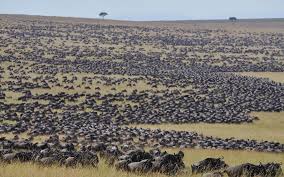
The Wildebeest Migration is not just about wildebeest. While over 1.5 million wildebeest lead the movement, they are joined by hundreds of thousands of zebras, elands, and gazelles. This creates one of the largest animal herds on the planet. The immense scale is what makes it officially recognized as the Seventh Wonder of the World.
Together, these animals form a living river that stretches across the plains ,a sight that leaves travelers and researchers in awe every year.
2. It’s Not a Single Event, It’s a Year-Round Cycle
Most people think the Wildebeest Migration only happens once. In reality, it is a continuous 12-month cycle across Tanzania’s Serengeti and Kenya’s Maasai Mara. Key stages of this cycle include:
- Calving Season (January–March in Serengeti)
- Rutting/Breeding Season (April–June)
- River Crossings (July–September in Maasai Mara)
- Return to Serengeti (October–December)
This continuous movement ensures the animals find fresh grazing areas as rainfall changes. So depending on the month, you can witness a completely different side of the Wildebeest Migration
3. The Wildebeest Are Smart Navigators
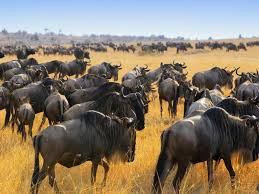
One surprising fact about the Wildebeest Migration is how the herds navigate with incredible accuracy. Scientists believe they rely on:
- Rainfall patterns
- Smell and sound
- Magnetic fields of the Earth
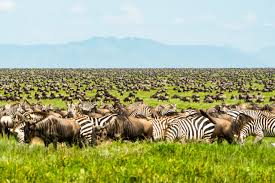
They instinctively know where fresh grass will grow even before rain arrives. Zebras also play a role ,their better eyesight helps detect predators and pathways, while wildebeest have a sharper sense of smell. The two species work together, proving nature has its own version of teamwork.
4. River Crossings Are the Most Dramatic Stage
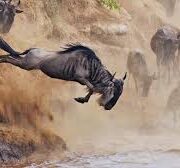
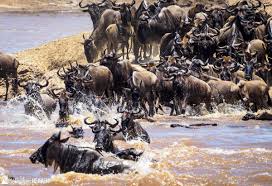
The most famous part of the Wildebeest Migration is the Mara River crossing in Kenya. This stage is intense and unpredictable because the animals must decide when and where to cross. The drama doesn’t come from violence, but from the sheer spectacle: dust clouds, splashing water, and thousands of animals moving as one.
It’s during this period that travelers flock to the Maasai Mara to witness the moment that made the Wildebeest Migration world-famous. This stage typically happens between July and September, though wildlife doesn’t follow strict calendar and that unpredictability is part of the magic.
5. Tourism from the Wildebeest Migration Supports Local Communities
The Wildebeest Migration isn’t just a natural wonder ,it also plays a major role in the East African tourism economy. Each year, thousands of visitors support:
- Local guides and drivers
- Camps and lodges
- Cultural tourism
- Conservation programs
When travelers book ethical and sustainable tours, they directly support wildlife protection and local livelihoods in Kenya and Tanzania. It’s a beautiful example of how tourism can uplift communities and preserve natural wonders at the same time.
Planning to Witness the Wildebeest Migration?
If you’re thinking about experiencing the Wildebeest Migration in person, partnering with an expert tour operator ensures you get the best viewing opportunities, comfortable accommodation, and safe travel logistics.
You can plan your trip with Alamaya Adventures here:
https://alamayaadventures.com/
Before choosing your travel dates, it’s also a good idea to check traveler reviews and recent sightings. You can explore reviews on TripAdvisor Kenya here:
https://www.tripadvisor.com/Tourism-g294206-Kenya-Vacations.html
Final Thoughts
The Wildebeest Migration continues to amaze scientists, photographers, and wildlife lovers worldwide. From its massive scale to its impact on ecosystems and local communities, it truly deserves its title as the Seventh Wonder of the World. If it’s on your travel bucket list, you will not be disappointed, this is one of those rare natural events that live up to the hype.